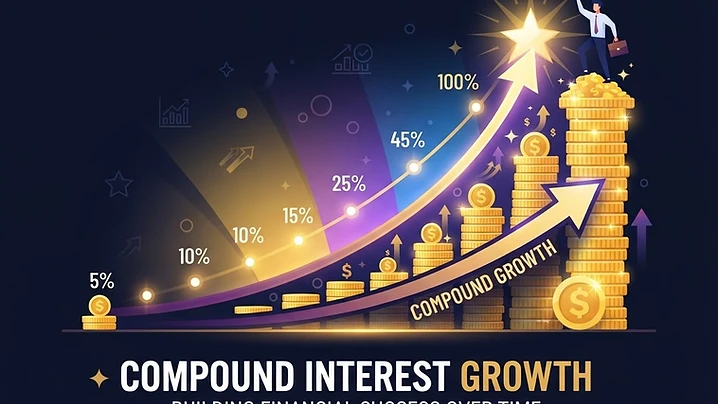
Compound interest is the process by which the interest your money earns begins to earn interest of its own. It sounds unremarkable in a single sentence, but over time it is one of the most powerful forces in personal finance — and the single biggest reason why starting early matters more than starting big.
The difference between simple and compound interest is best seen side by side. With simple interest, you earn a fixed amount each year on your original deposit. With compound interest, each year's earnings are added to the balance, so the next year's interest is calculated on a larger amount. After a decade or two, the two curves diverge dramatically.
Frequency matters as well. Interest compounded monthly grows faster than interest compounded yearly, because the balance that earns interest is refreshed more often. The Simple & Compound Interest Calculator lets you switch frequencies to see exactly how much of a difference it makes.
The most important lesson from compounding is about time, not amount. Someone who saves a small sum starting at age 25 will typically end up with more than someone who saves a much larger sum starting at 35 — because the earlier saver gives their money ten extra years of compounding. The earlier contributions do the heaviest lifting.
This also works in reverse. The same force that builds savings will build debt just as efficiently, which is why high-interest borrowing is so destructive. Run a compounding calculation on a typical credit-card balance and the number is sobering.
Use the calculator to model a few scenarios with your own numbers. Seeing your own balance curve bend upward is the most convincing argument for starting — and staying — invested.